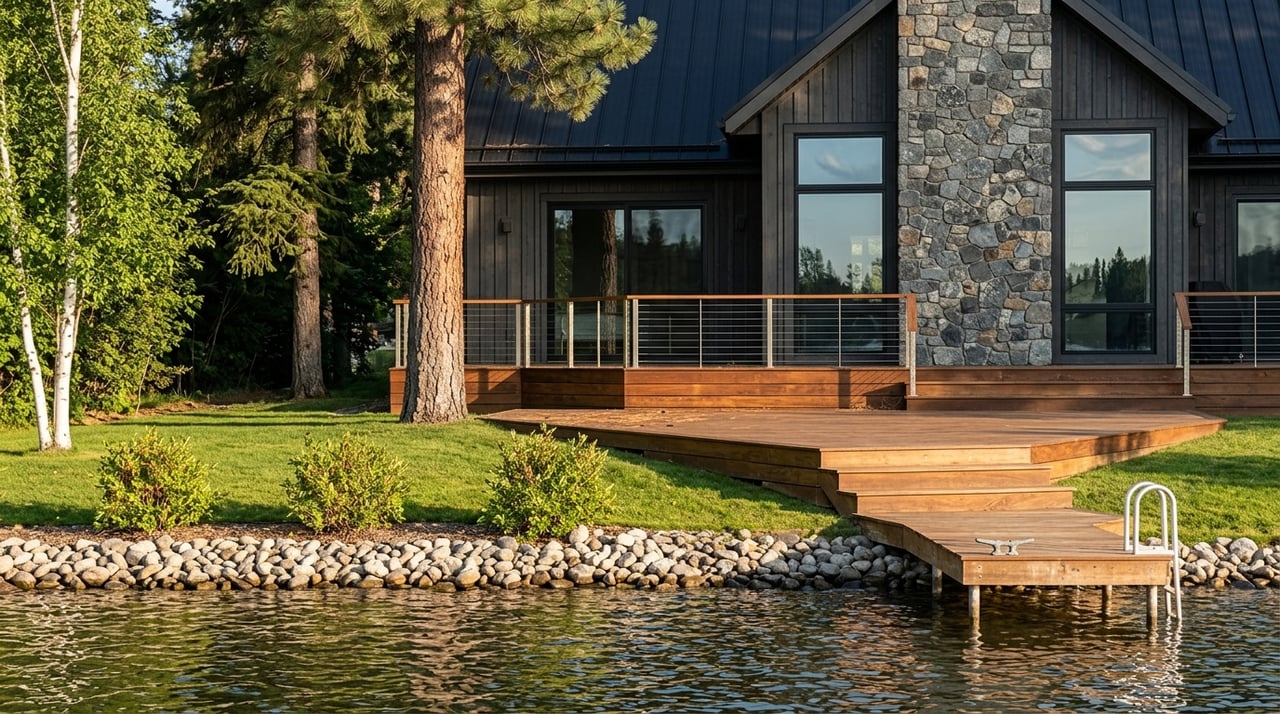
Waterfront property in Sandpoint can be stunning, but it also comes with questions you may not face in a typical home search. You might love the view, the dock, or the idea of keeping a boat nearby, only to learn that water levels, shoreland rules, or access limits can shape how the property works day to day. If you are considering a home on or near Lake Pend Oreille, this guide will help you understand what matters most before you make an offer. Let’s dive in.
Why Sandpoint Waterfront Draws Buyers
Lake Pend Oreille is the center of the Sandpoint waterfront market. According to Idaho Fish and Game, it is Idaho’s largest lake, with 144 miles of shoreline and one of the deepest inland lake profiles in North America.
That scale is part of the appeal. Many buyers are not just looking for a house. They are looking for a home base for boating, fishing, paddling, and spending more time outdoors in North Idaho.
Lake Pend Oreille is also one of Idaho’s most popular fisheries. Idaho Fish and Game notes that the lake supports native species such as westslope cutthroat trout and bull trout, along with more than 10 non-native species, which adds to its year-round recreational draw.
Know the Waterfront Setup
Not every waterfront listing offers the same kind of access or flexibility. In the Sandpoint area, you will usually see three broad types of properties.
True shoreline frontage
These properties sit directly on the water. They may offer private shoreline, a dock area, or direct walk-down access, but the way that access functions can still depend on local rules, seasonal lake levels, and the exact shape of the lot.
Shoreline-adjacent homes
Some homes are close to the water and fall under Bonner County shoreland rules even if they do not function like classic lakefront property. The county defines shore land as land extending 200 feet inland from the shoreline, which means restrictions can affect more parcels than buyers expect.
Water-access properties
Other homes rely on nearby public launches or private marina options rather than direct frontage. These can still support a waterfront lifestyle, but they create a different ownership experience, especially if you plan to boat often.
Lake Levels Matter More Than Buyers Expect
One of the biggest practical differences with Sandpoint waterfront property is that shoreline conditions are not shaped by the lot alone. The U.S. Army Corps of Engineers operates Albeni Falls Dam, and lake levels are managed for several purposes including flood risk management, hydropower, recreation, navigation, and water quality.
In March 2026, the Corps said it would manage summer lake levels within a normal band of 2,062.0 to 2,062.5 feet near Hope, Idaho. For you as a buyer, that means shoreline usability can change based on managed water operations as well as weather and season.
Bonner County also notes that low pool occurs during the winter months. If a property has a dock, cove access, or a launch nearby, it is worth confirming how usable those features are when the lake drops.
Check Boat Access in Every Season
A property that looks perfect in summer may feel very different in winter or shoulder seasons. That is why seasonal access should be part of your showing and inspection questions from the start.
Bonner County says Garfield Bay and Hope Boat Launch are the county launches best suited to low-pool use on Lake Pend Oreille. Laclede is recommended only for small craft, and county launches are day-use only with no overnight parking.
If you plan to keep a boat in the water or launch often, ask very direct questions such as:
- How does access work during low water?
- Is the dock usable throughout the boating season?
- Are there nearby launch or marina options?
- What does the shoreline look like in winter versus summer?
These details can affect convenience just as much as square footage or views.
Understand Shoreland Rules Early
On waterfront property, the lot lines do not tell the whole story. Bonner County’s shoreland code can have a major effect on how much of the site feels usable.
The county limits impervious surface in shore land to 35%. That maximum can increase to 52.5% only if all structures are at least 75 feet from the shoreline.
There is also a shoreline vegetative buffer that applies to the first 40 feet from the shoreline. The code prioritizes keeping or restoring noninvasive or native vegetation in that area.
In simple terms, a parcel may appear generous on paper but still have meaningful limits on patios, additions, hardscape, and outdoor living areas near the water. This is one reason experienced local guidance matters when comparing waterfront homes.
Access structures are regulated too
Water access is not just about whether you can reach the shore. It is also about how that access is allowed to be built or maintained.
Bonner County allows certain narrow access elements within the setback in some cases, including trams, rails, uncovered steps, stairs, or walkways that are four feet wide or less. At the same time, boardwalk-style construction parallel to the shore is generally restricted.
That means two homes with similar views may offer very different real-world access. A showing should include questions about what is existing, what is permitted, and what changes may or may not be realistic in the future.
Floodplain and Insurance Need Attention
Floodplain status is a key part of waterfront due diligence in Bonner County. The county participates in the National Flood Insurance Program and requires a Floodplain Development Permit for work in Special Flood Hazard Areas.
Its code also generally requires new residential construction in mapped Special Flood Hazard Areas to place the lowest floor at least one foot above the base flood elevation. For you, that can affect financing, insurance costs, renovation plans, and the feasibility of future additions.
This is not the kind of detail to leave until late in the process. If a property is in or near a mapped floodplain, it is smart to verify that status early.
Septic, Wells, and Site Feasibility
On waterfront lots, the prettiest features are not always the most important ones. Septic and well feasibility can shape what you can do with a property, what permits may be required, and what future improvements are possible.
Panhandle Health District says Idaho permits are required for all subsurface sewage disposal systems. Approval depends on site-specific conditions such as well or spring location, surface water, groundwater depth, grading, and soil type.
That is especially important on or near the water, where site constraints can be tighter. If a property uses a private well, flood history and water testing also deserve close attention.
City Limits Can Add Another Layer
If the property is inside Sandpoint city limits, city planning and building permits may apply in addition to county rules. This is especially important if you are considering remodeling, guest use, or income potential.
The City of Sandpoint also requires a valid short-term rental permit to operate a short-term rental within city limits. If that use matters to you, verify zoning and permit status before you close, not after.
Boating Rules Affect the Experience
Lifestyle is a major part of the value of waterfront property, so it helps to understand how local boating rules can shape that experience. Bonner County sets no-wake distances within 200 feet of shorelines, docks, bridges, other structures, or people in the water on Lake Pend Oreille and the Pend Oreille River.
The county’s general speed limit on the lake and river is capped at 50 mph where not otherwise regulated. For buyers, that can influence how calm or active a cove feels for swimming, paddleboarding, or day-to-day boat traffic.
Invasive Species Rules Are Part of Ownership
If you plan to use the lake regularly, Idaho’s aquatic invasive species rules are part of everyday waterfront ownership. State law requires many watercraft to stop for inspection, and out-of-state watercraft must be inspected and decontaminated before launch.
The state’s guidance applies to motorized and nonmotorized boats alike. In practice, clean, drain, dry is not just a seasonal reminder. It is part of responsible routine use.
Questions To Ask Before You Offer
A waterfront showing should go beyond finishes and views. You want to understand how the property functions across seasons and what limits may affect your plans.
Here are smart questions to ask on every Sandpoint waterfront property:
- Is the parcel in the 200-foot shoreland zone?
- What setbacks or vegetation buffer rules apply?
- Is the property in a mapped floodplain or Special Flood Hazard Area?
- How does water access work during low pool and in winter?
- Is the home served by septic and a private well, or public systems?
- Are there restrictions that could affect future remodeling or additions?
- If the home is in city limits, what local permit rules apply?
Why Local Guidance Matters
Buying waterfront property in Sandpoint is often about more than finding the right house. You are also evaluating shoreline rules, access, lake levels, utility systems, and long-term usability.
That is where calm, detail-driven guidance can make a real difference. When you know the right questions to ask early, you can avoid surprises and focus on the properties that truly fit your goals.
If you are exploring waterfront homes in Sandpoint or anywhere in North Idaho, The TarantoGroup Realty can help you evaluate the details with clarity and confidence.
FAQs
What makes Sandpoint waterfront property different from other homes?
- Sandpoint waterfront property often involves added factors like shoreland rules, managed lake levels, floodplain review, seasonal access, and septic or well considerations.
What is the shoreland zone in Bonner County?
- Bonner County defines shore land as land extending 200 feet inland from the shoreline, and that zone can include setbacks, vegetation buffer requirements, and limits on impervious surface.
What should buyers ask about Lake Pend Oreille boat access?
- Buyers should ask how access works during low water, whether docks stay usable through the season, and what nearby launch or marina options are available.
Do Sandpoint waterfront homes need floodplain review?
- Some do, and floodplain status can affect financing, insurance, building plans, and permit requirements, so it should be verified early in the buying process.
Are septic and wells common on waterfront property near Sandpoint?
- They can be, and site-specific approval factors such as soil, groundwater depth, and surface water location can make septic and well review an important part of due diligence.
Can you use a waterfront home in Sandpoint as a short-term rental?
- If the property is within Sandpoint city limits, a valid short-term rental permit is required, so buyers should confirm local zoning and permit status before closing.